
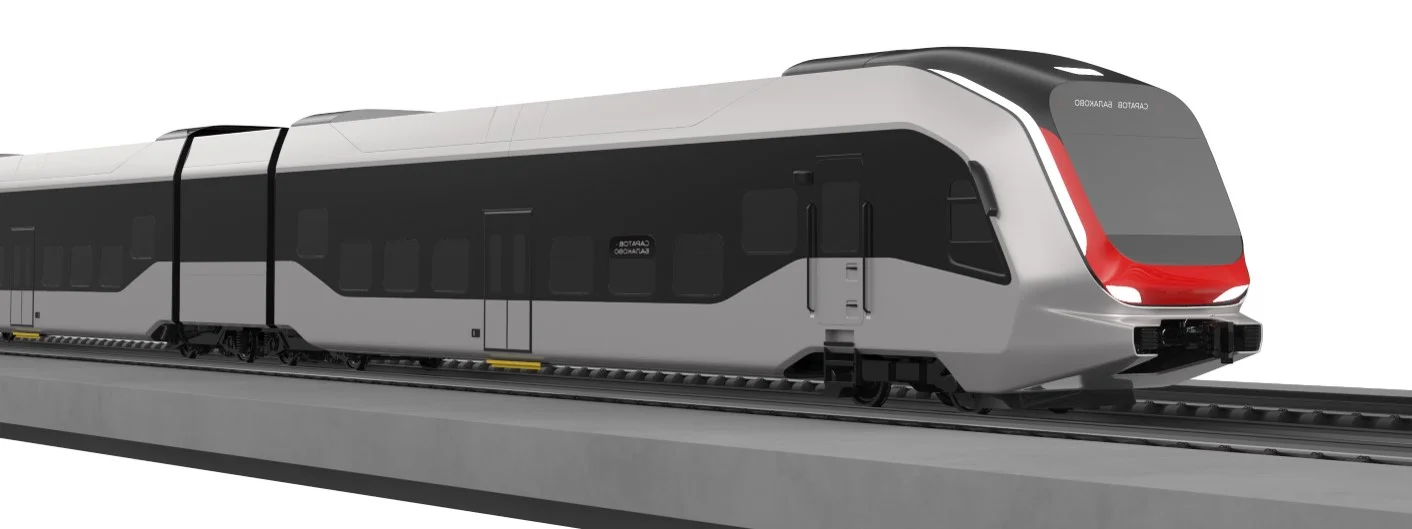
Rolling stock for low-traffic lines
Development of rail buses for sections of the Russian Railways network with low traffic intensity.
About the project
ECRT, commissioned by Russian Railways, is developing low-floor rolling stock for operation on low-traffic lines of Russian Railways. The approved working designation of the model range under development is:
- rail bus RA11 — single-car version
- rail bus RA12 — two-car version
- rail bus RA13 — two-car version with enhanced-comfort car interiors
A technical specification for RA12 has been developed; detailed design is in progress.
Forecast serial production volumes for rail buses are 300 cars (75 cars per year over 4 years) for operation on low-traffic lines of the Russian Railways network.
Creating modern rolling stock for passenger services on low-traffic sections of the Russian Railways network addresses the acute social challenge of transport accessibility to remote settlements for residents across the country.
Rolling stock configurations
Based on analysis of route network data and passenger traffic volumes on low-traffic railway lines, development and deployment of two rolling stock types is planned:
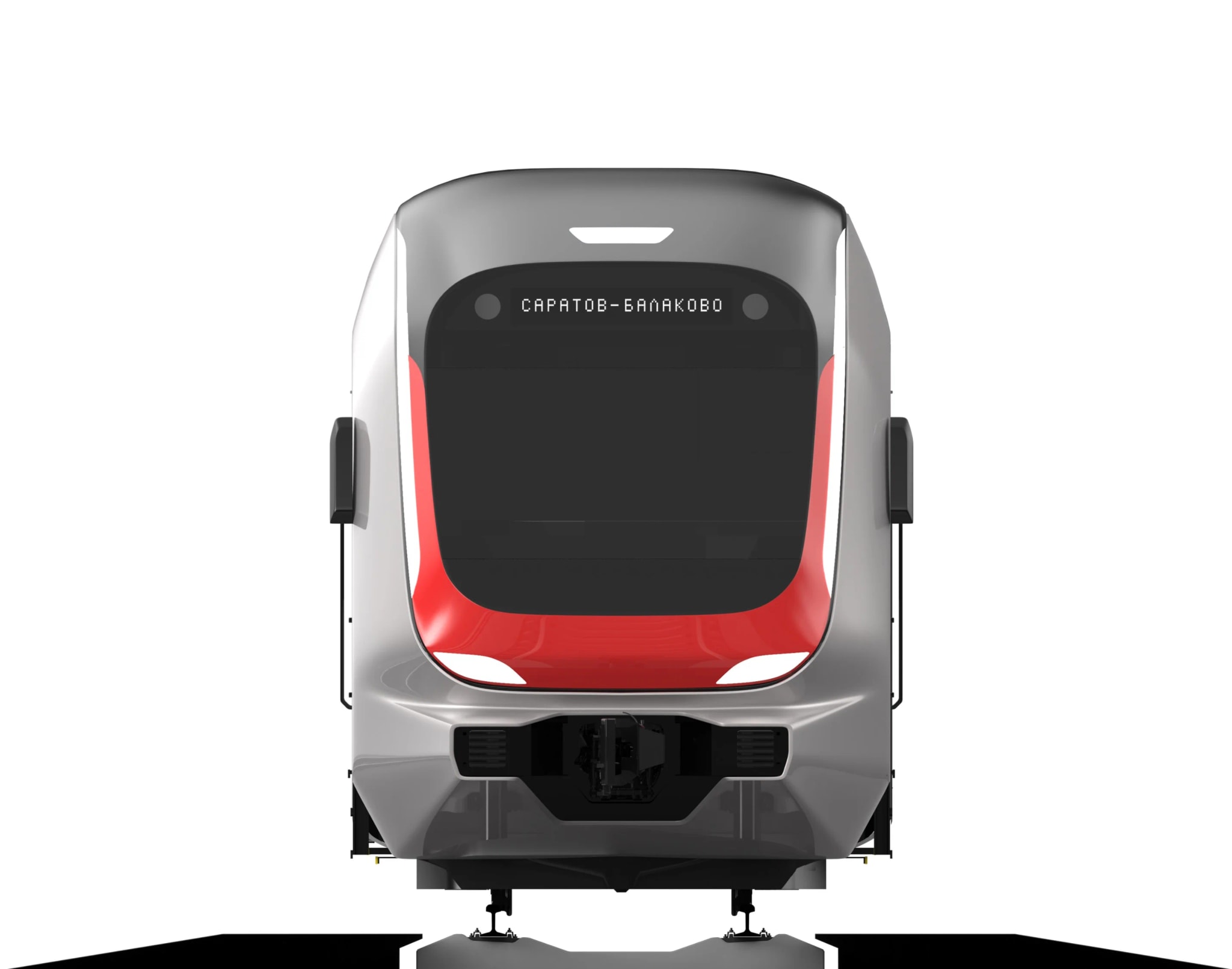
For routes up to 50 km in length, a single-car multiple unit with a power plant based on a rechargeable energy storage system and an auxiliary diesel-generator unit, 58 seats and a design capacity (seated plus 3 persons/m² standing on free floor area) of 93 passengers in a 3rd-class interior layout (3+2 seating)
For routes over 50 km in length, a two-car multiple unit with a booster section containing two diesel-generator units, 126 seats and a design capacity of 192 passengers in a 3rd-class interior layout
58→ 93
Single-car multiple unit: seats and design capacity, passengers
126→ 192
Two-section multiple unit: seats and design capacity, passengers
up to 50km
Single-car configuration routes
Platform requirements
A key parameter for both rolling stock types is a reduced floor height providing barrier-free access (without steps or stairs) for passengers boarding and alighting on railway lines equipped with low passenger platforms at a nominal height of 200 mm. Boarding from ground level is also envisaged.
200mm
Nominal height of low passenger platforms
Programme context
Russian Railways has initiated a project to create low-floor rolling stock for operation on low-traffic sections of the Russian Railways network.
New rolling stock is being created to replace the retiring rail bus fleet: the existing DT1, RA1, and RA2 diesel train fleet will be withdrawn from service between 2030 and 2040 upon reaching end of service life, while production of the RA3 modification developed as a replacement was halted by Transmashholding (TMH) in 2022 due to unavailability of key components (underfloor power plant). Resumption of production of this rolling stock is not planned in the medium term. TMH is currently developing a low-floor rolling stock platform of three or more cars, whose operation on low-traffic lines is inefficient.
In view of this, Russian Railways has decided to develop rolling stock in single-car and two-car configurations in-house, meeting the requirements for operation on low-traffic lines.
The Russian Railways network currently totals 85.6 thousand kilometres. Of these, 360 lines totalling 15.47 thousand km are low-traffic sections. Nearly half of all low-traffic lines have social and defence significance. Marketing research also indicates a need to organise services on new routes on low-traffic lines, requiring new rolling stock. A fundamentally new rolling stock type is therefore required for efficient operation on low-traffic sections.
2030– 2040
Withdrawal period for the DT1, RA1, and RA2 fleet