Skip to content
Track V2.5 — ECRT project

Innovative railway track structure for heavily loaded sections and its elements (Path V2.5)

Development of track structure and maintenance technologies providing 2.5 billion gross tonnes of throughput capacity.

About the project

JSC Engineering Center of Railway Transport (ECRT) has established a dedicated unit for developing advanced track infrastructure solutions (Infrastructure Development Center).

Under the Russian Railways programme to create a track structure and maintenance technologies providing 2.5 billion gross tonnes of throughput, the Center acts as developer of the structure, its elements, and maintenance technologies, and as coordinator of all project participants.

The project goal is to reduce track life-cycle cost on heavily loaded sections by extending gross tonnage throughput between capital and intermediate track maintenance cycles.

R&D and deployment of maintenance technologies for the innovative track structure are carried out from 2021 to 2026.

Main workstreams

  • Development of track structure elements with improved operational and resource characteristics

  • Addressing the integrated challenge of synergising technical characteristics of track elements within a unified structure

  • Creating a maintenance and monitoring system enabling effective reliability of the track structure

  • Creating a complex of mathematical models for the railway track

Competence ecosystem

The project is complex and research-intensive, leading Russian competence centers have been engaged across the following areas:

  • infrastructure design bureau (PCB I);
  • specialist research organisations and higher education institutions: VNIIZHT, RUT (MIIT), PGUPS, SGUPS, ICT VEIP, and Peter the Great St. Petersburg Polytechnic University;
  • manufacturers and developers of track superstructure elements and structures: EVRAZ, Novosibirsk and Murom switch plants, RZDstroy, BetElTrans (BET), and others.

Maintenance schemes

Preliminary maintenance schemes are defined by the Technical Requirements for track structure and maintenance system.

Key target indicators:

  • 2.5billion t

    Target gross throughput between capital track maintenance cycles

  • 225 → 450million t

    Increase in gross throughput between intermediate maintenance cycles

  • 233 → 350million t

    Increase in gross throughput between intermediate maintenance cycles for sections with complex alignment and profile

Accordingly, an important aspect of project implementation is ensuring compliance with criteria for both the first limit state (strength and stability) and the second limit state (stability of track position in plan and profile).

Mathematical modelling and track structure calculations

Mathematical modelling receives substantial attention during project implementation. A suite of mathematical models has been developed and is used for design and calculations of innovative track structures. All models have been validated based on experiments conducted by VNIIZHT, MIIT, and ICT VEIP.

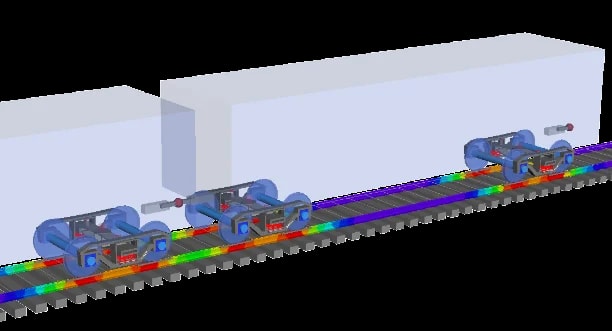
Analysis of dynamic track–rolling stock interaction

Multi-body dynamic modelling accounts for all aspects of rolling stock suspension and track superstructure design to determine loads from the wheel on the rails.

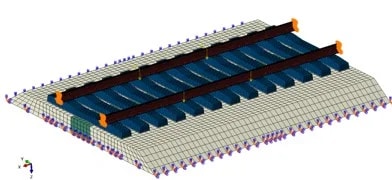
Calculation of stress–strain state of track superstructure

Dynamic loads obtained are applied to a finite-element model of the track superstructure to determine rail deflection and uplift, instantaneous sleeper settlements, and vertical and lateral loads on rail fastening nodes. Rail strength and track stability are determined.

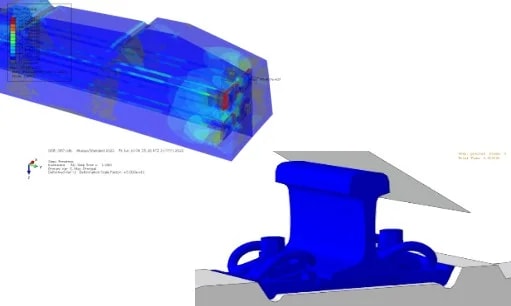
Strength calculation of intermediate rail fastenings and concrete sleepers

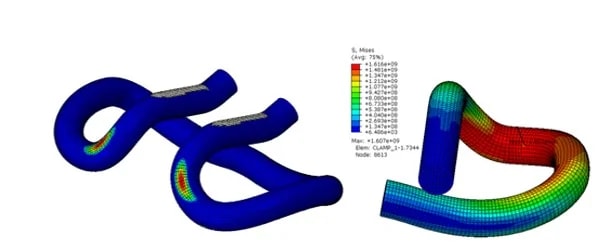
Detailed finite-element models of fastenings determine their translational and rotational stiffness, assess strength and deformability of structural elements, and determine elastic clamp service life. Detailed sleeper models account for prestressing of reinforcing elements and allow crack development in concrete to be determined.

Geotechnical modelling of the sub-sleeper foundation

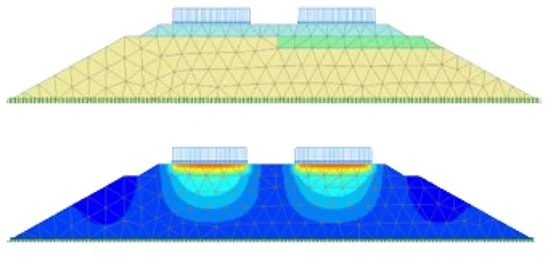
Specialised geotechnical finite-element models are used to determine deformability and stability of the ballast prism, embankment, and foundation, including possible strengthening of the main embankment platform.

Optimisation of track superstructure elements

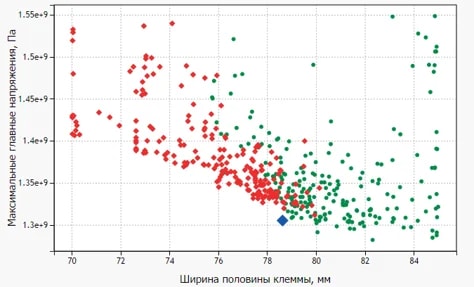
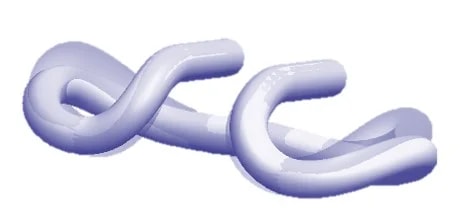
Multi-criteria parametric optimisation is used to obtain three-dimensional geometry of elastic clamps with high clamping force, fatigue durability, and natural vibration frequencies. Reinforcement of concrete sleepers and required deformability indicators of track structure materials are also optimised.

Testing and validation of characteristics

During project implementation, a comprehensive programme of preliminary (factory), laboratory, and bench testing was completed, confirming the characteristics of the innovative track structure under development and its elements.

Operational testing

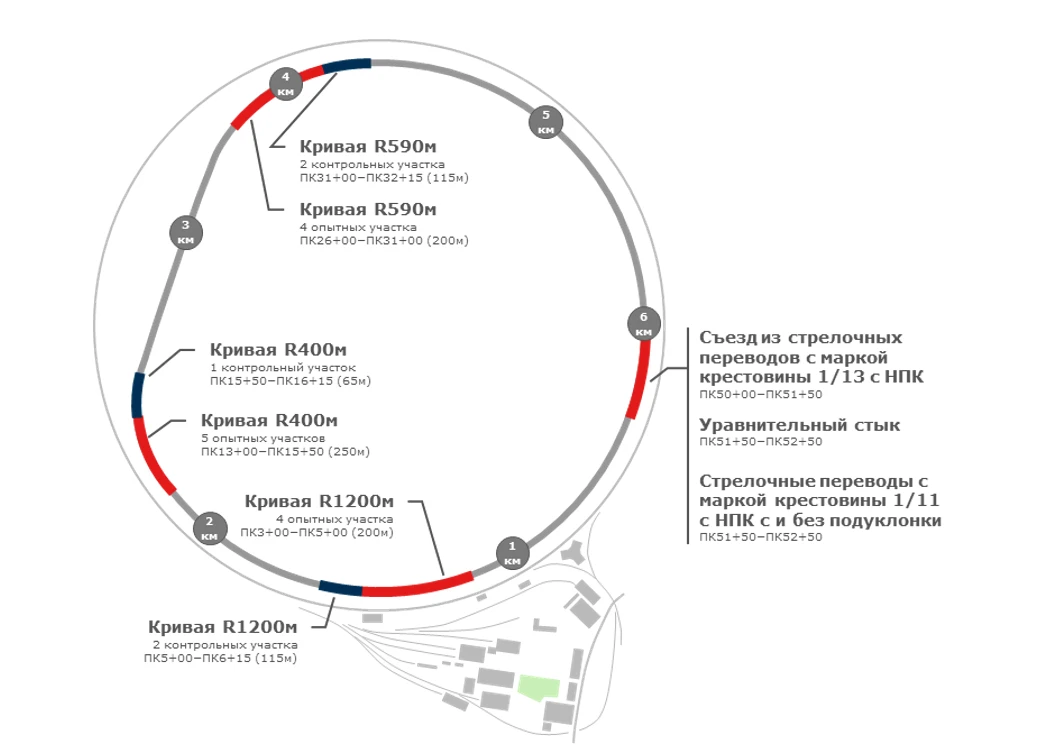
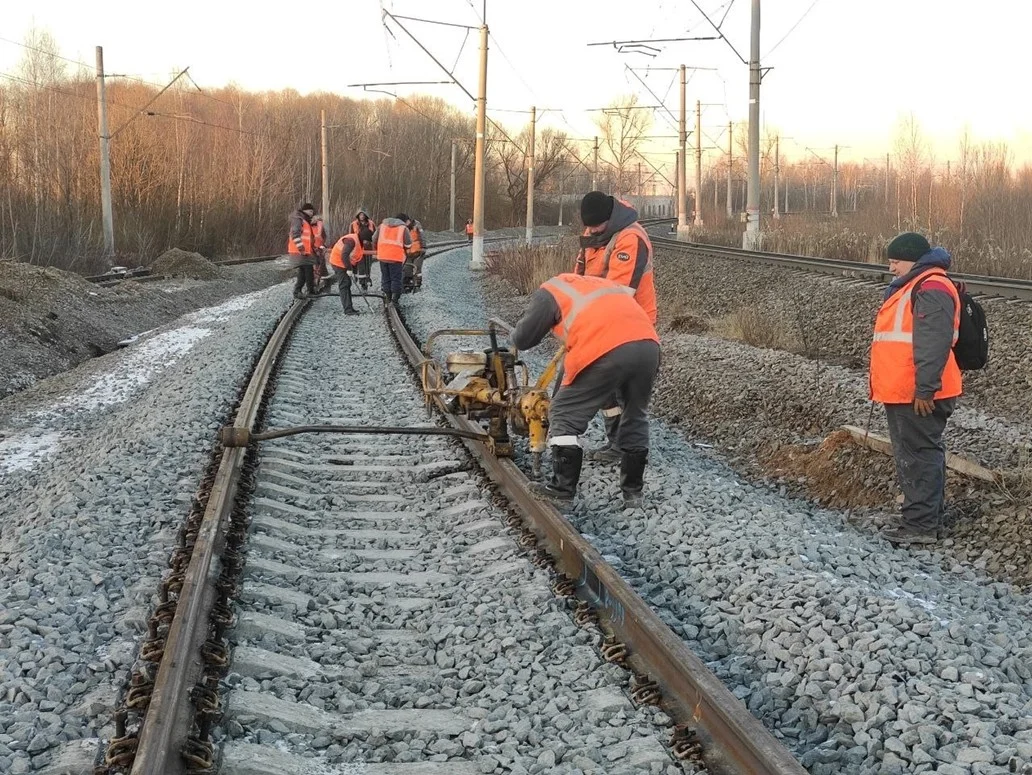
To conduct operational testing of the innovative track structure, in autumn 2023 at the Experimental Ring at Shcherbinka station, test and control track sections were installed in curves with radii of 1200, 590, and 400 m. Thirteen test sections with a total length of 650 metres were laid with various rail-and-sleeper grid configurations, along with five control sections with a total length of 295 metres.

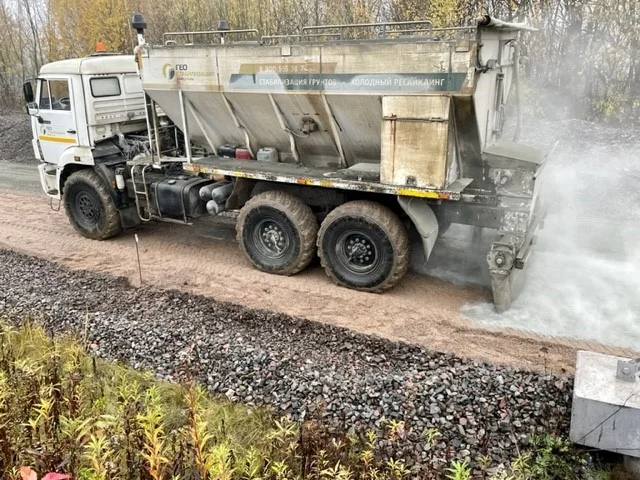
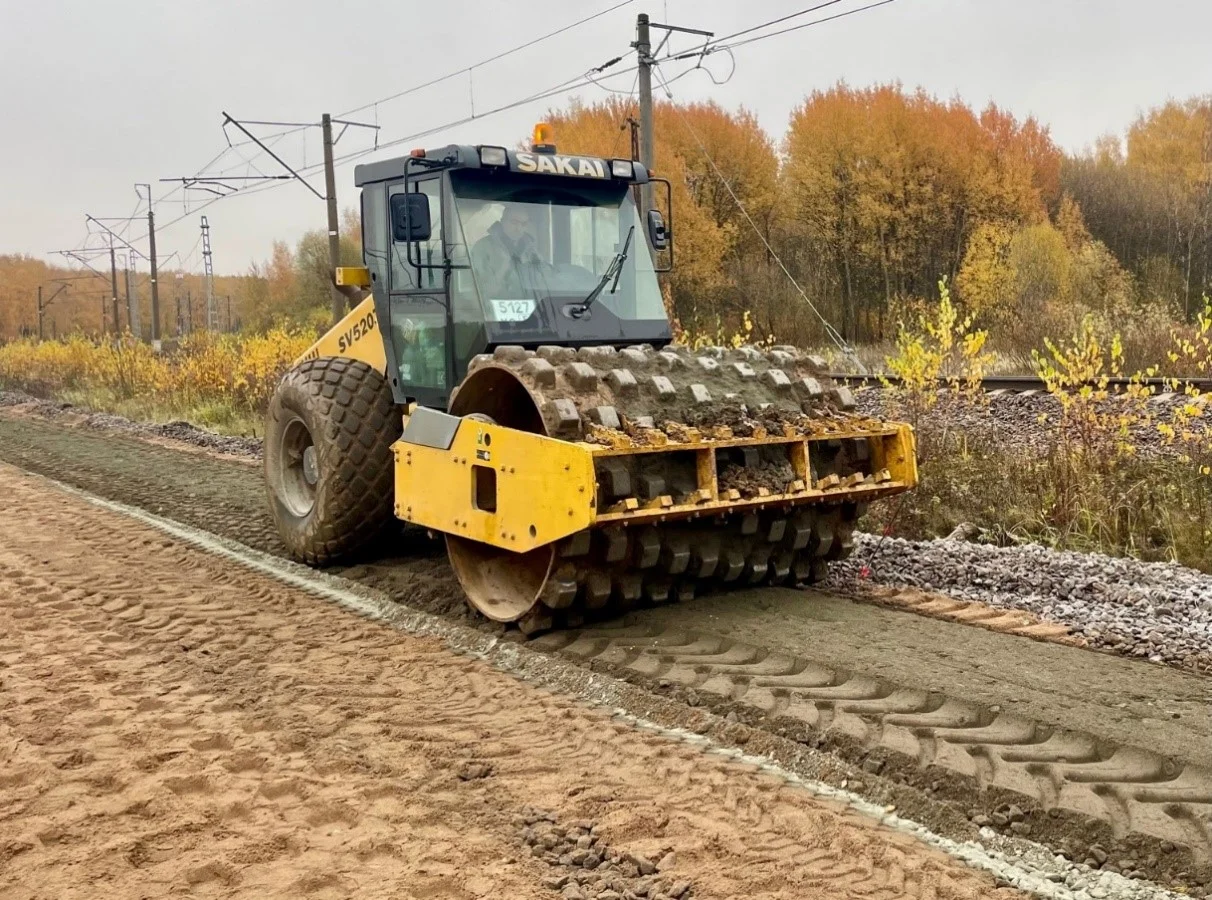
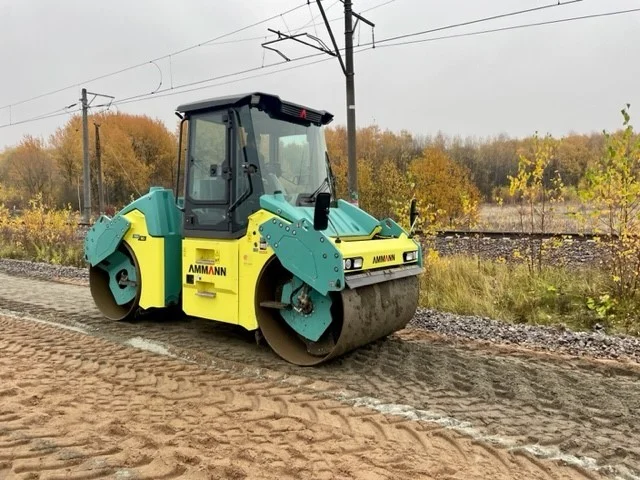
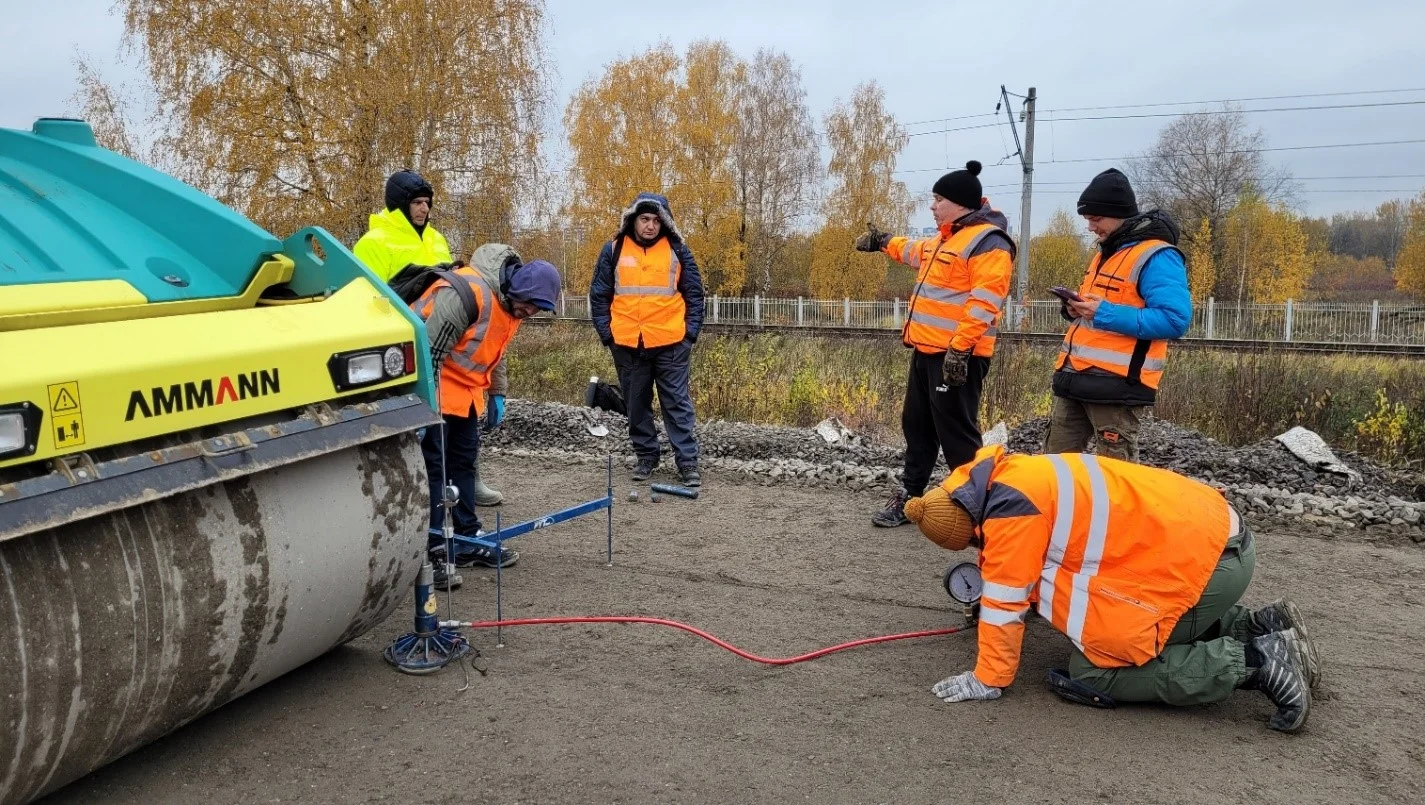
On the test sections, a ballast layer of basalt rock in a new fraction from 10 to 63 mm was installed. An experimental cold recycling process for the sub-ballast protective layer was also developed.

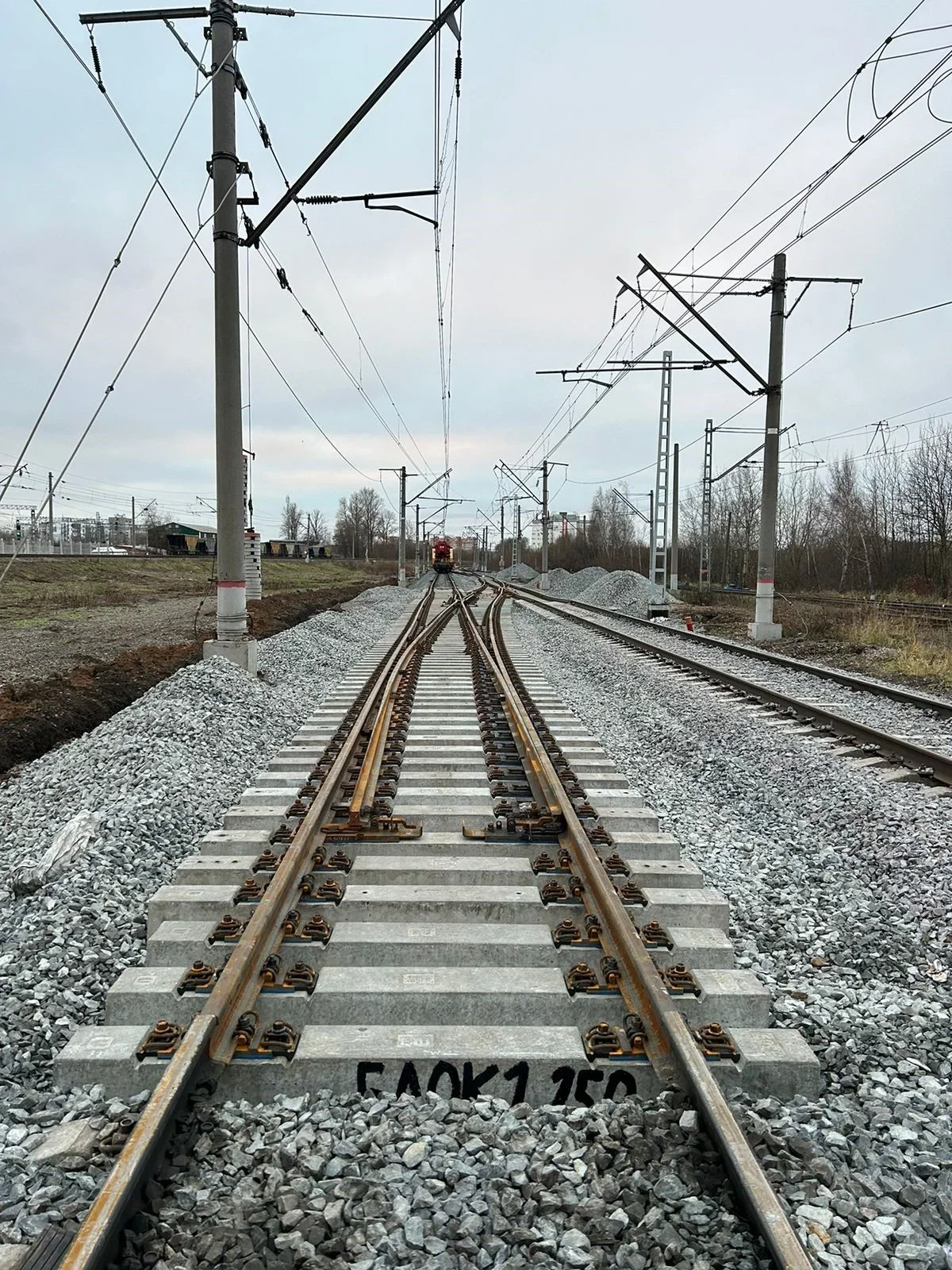
In autumn 2024, at the Experimental Ring at Shcherbinka station, innovative 1/11 turnouts with a continuous running surface — with and without cant on the rail strings — a 1/13 diverging turnout with a continuous running surface and cant on the rail strings, and a high-durability insulated joint were installed for operational testing.

Operational testing of the innovative track structure was completed in autumn 2025.

Technology deployment

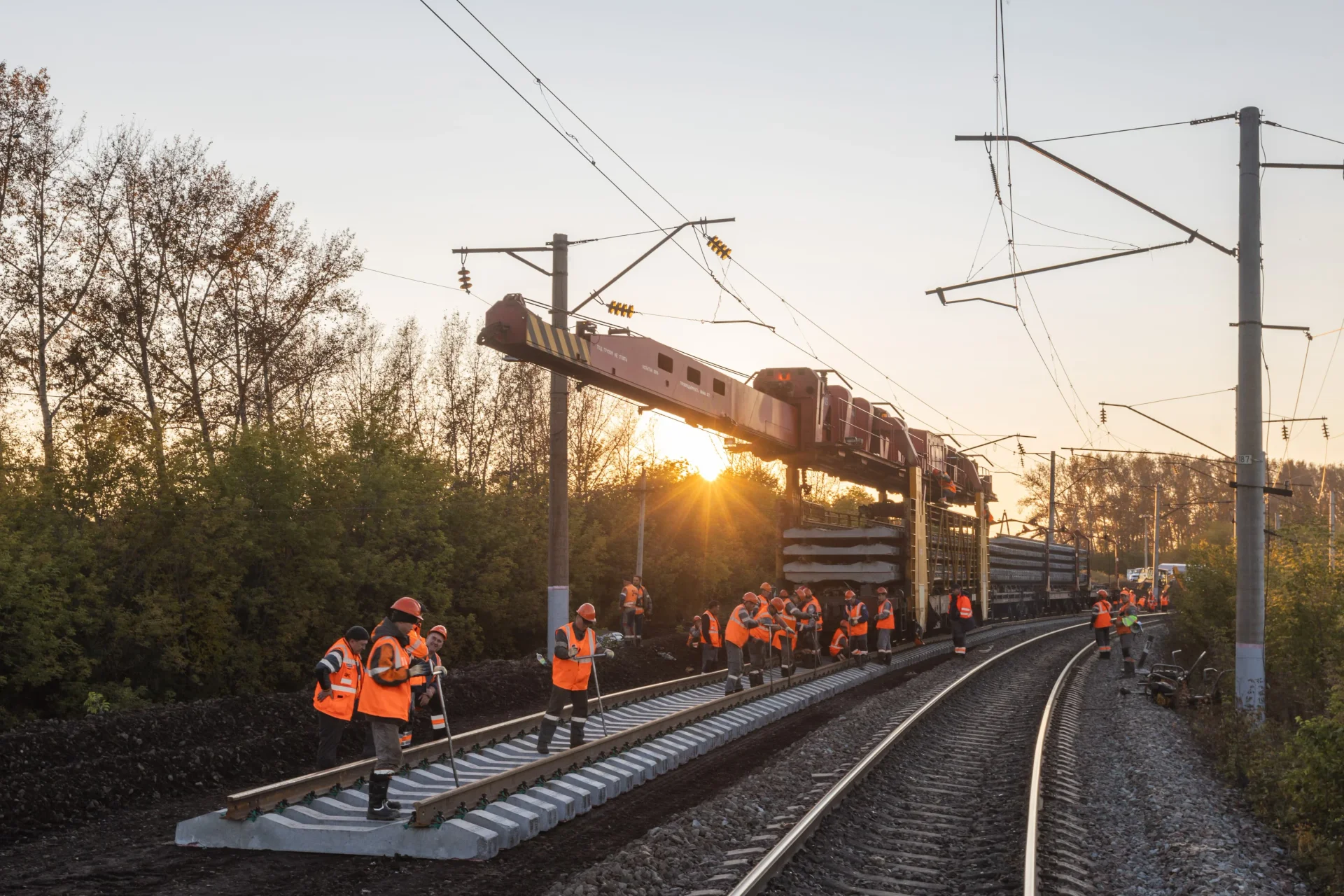
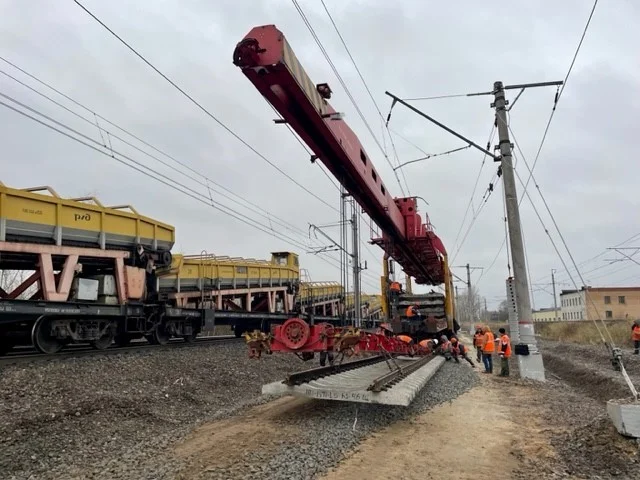
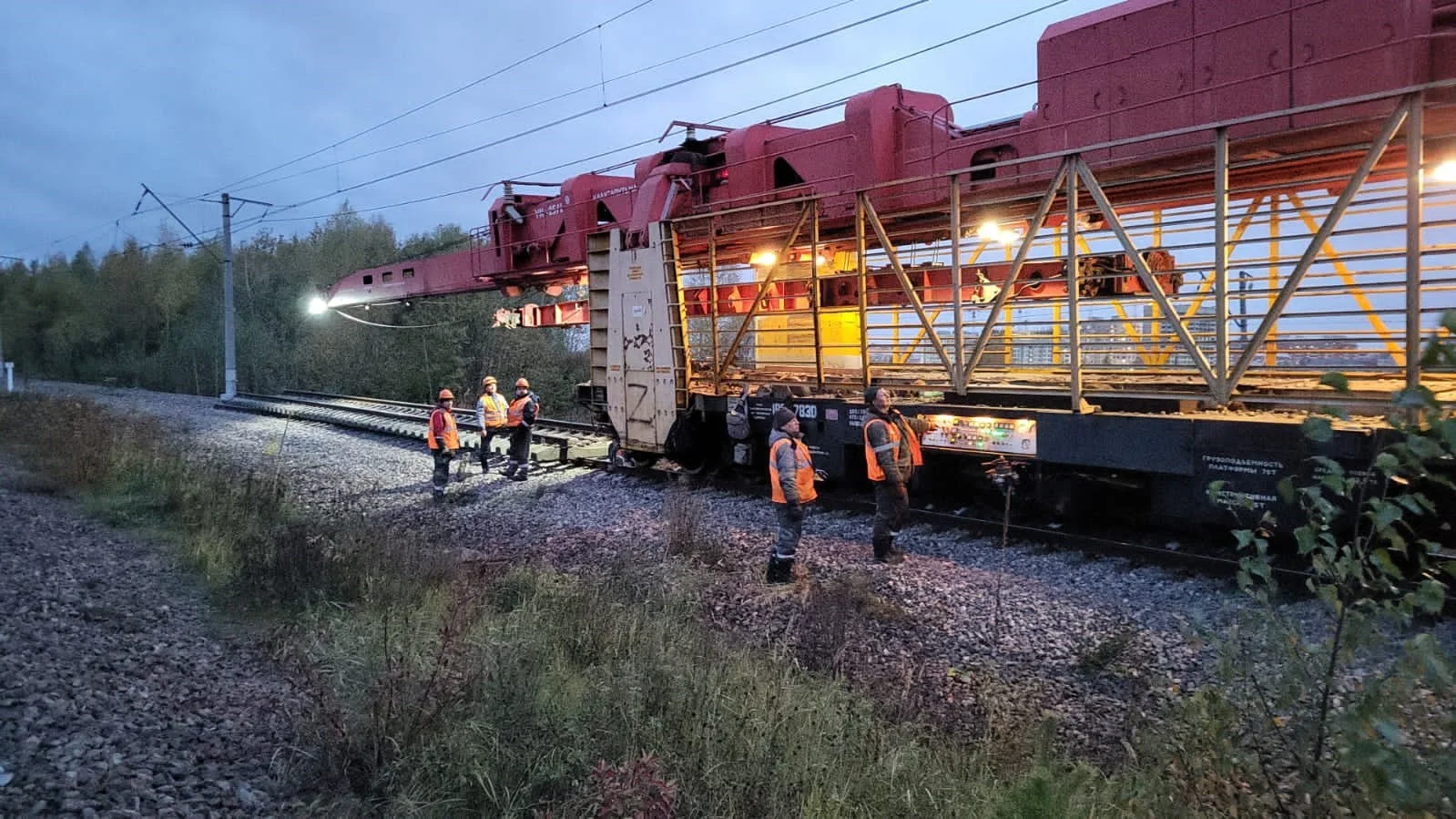
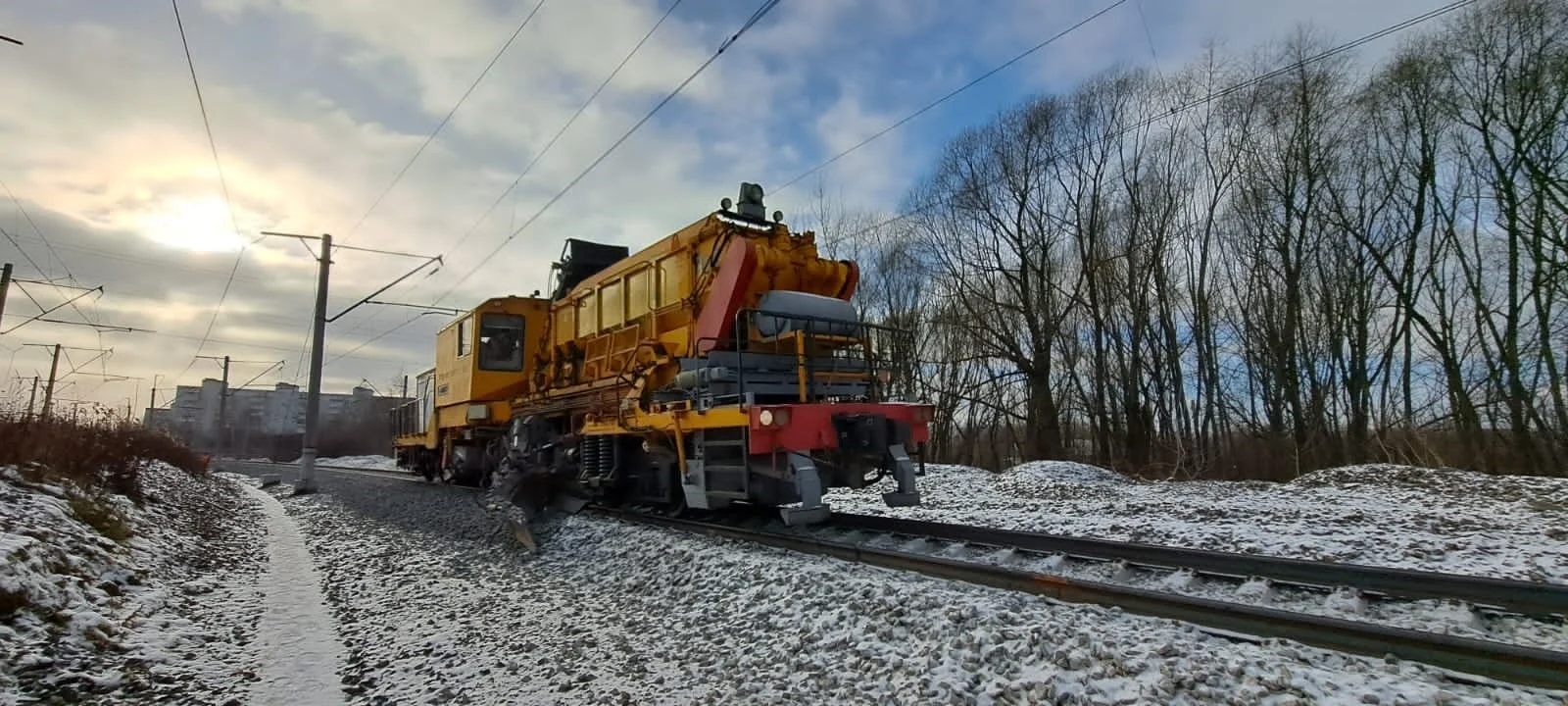
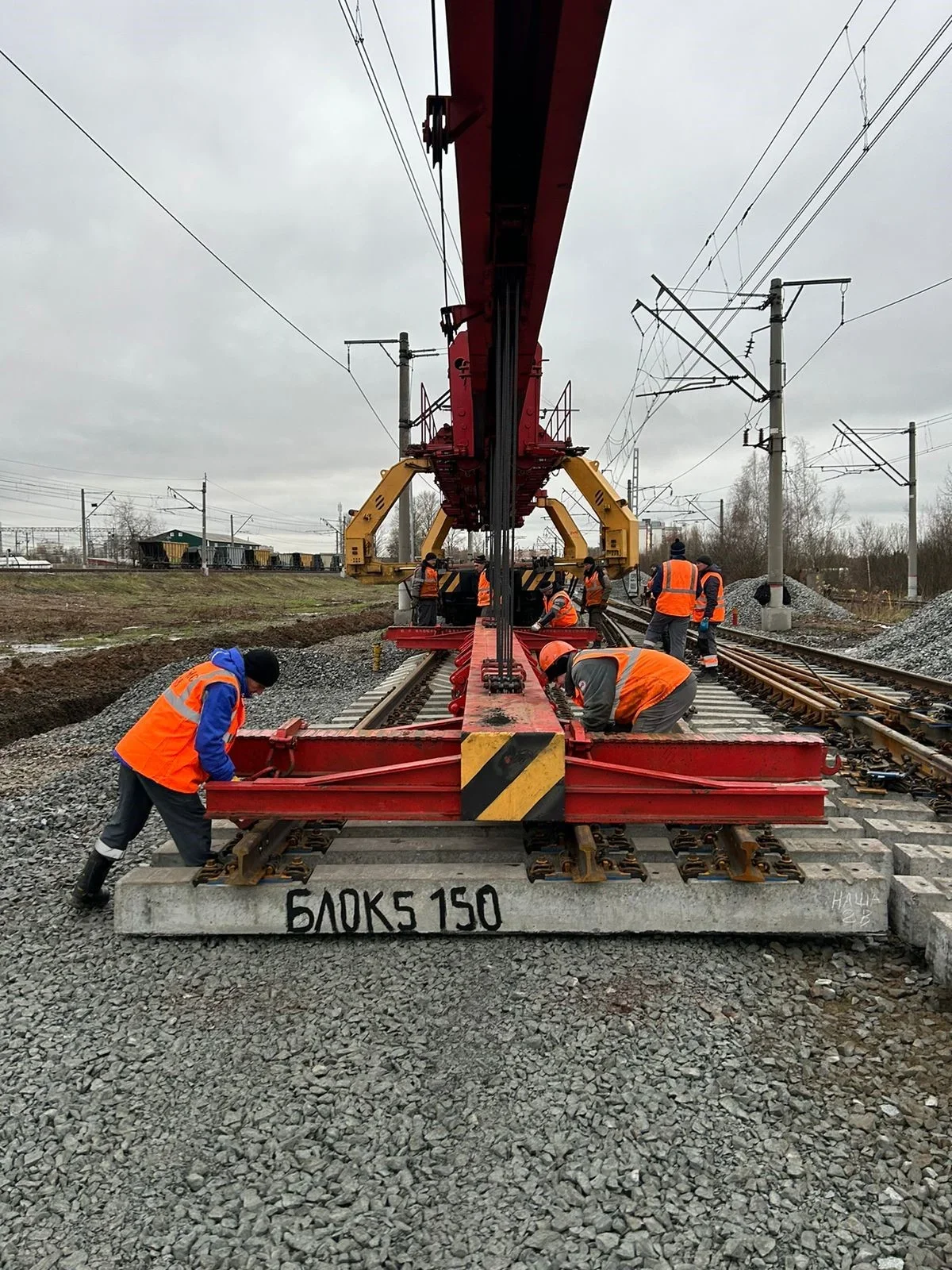
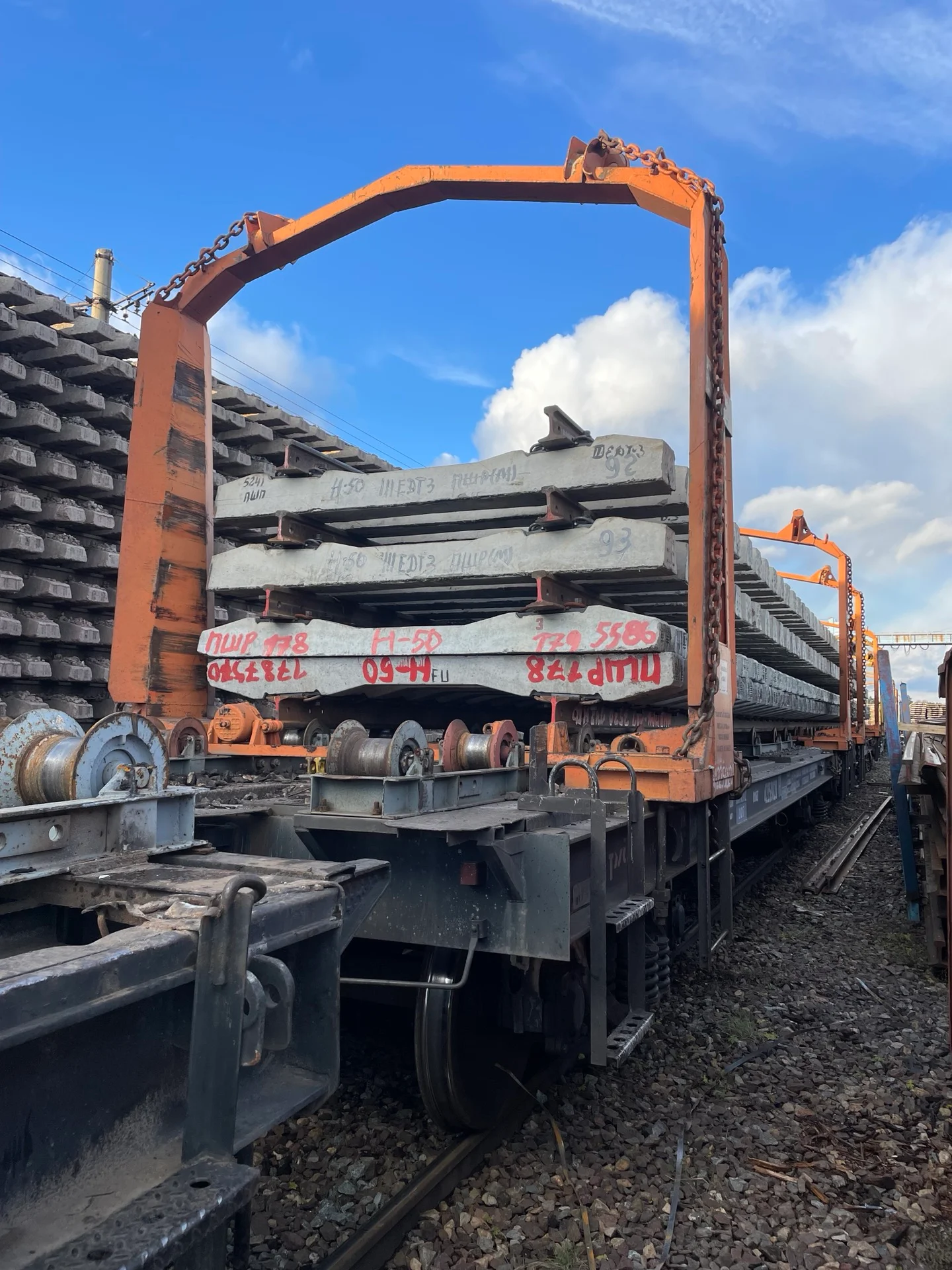
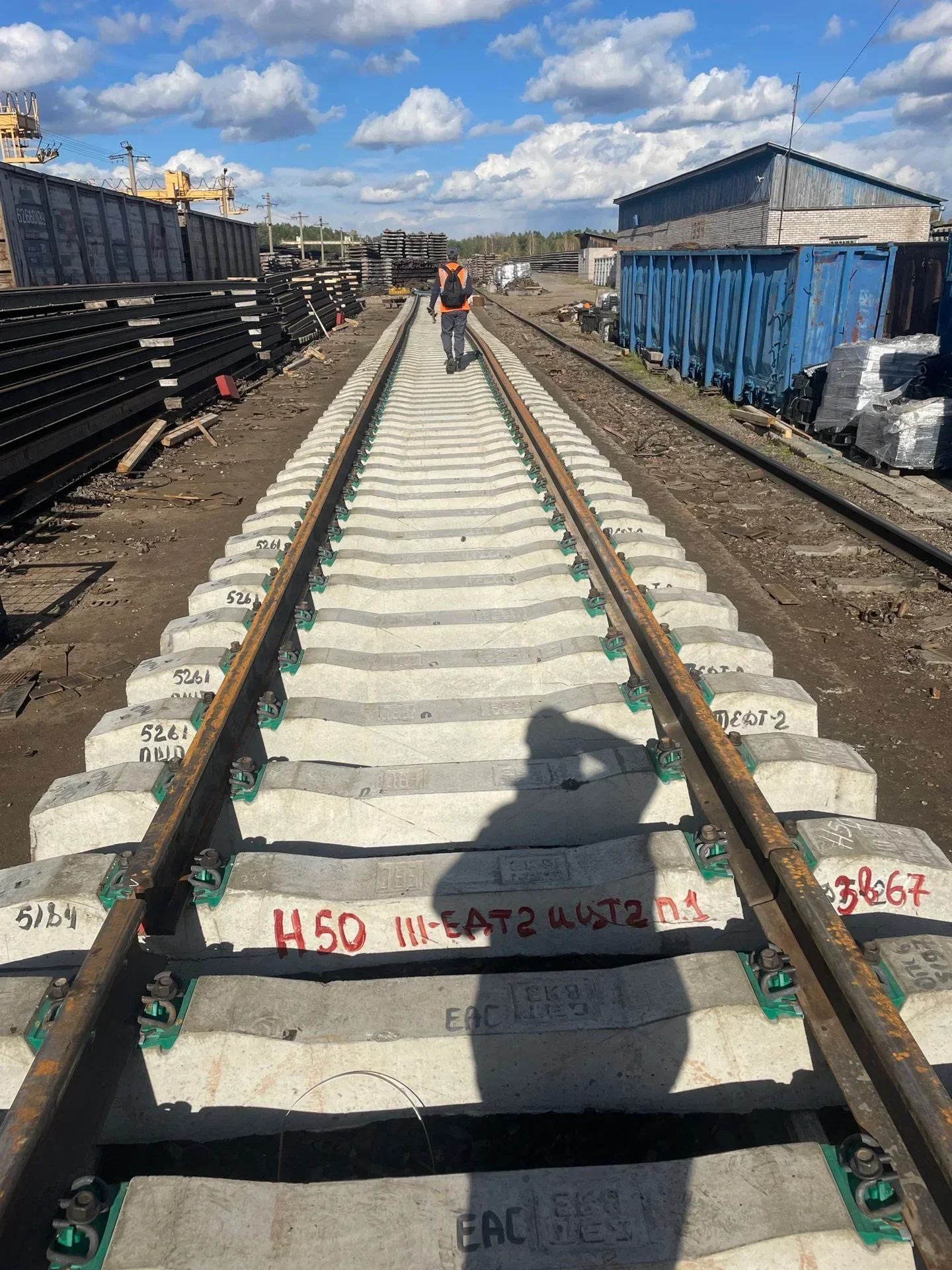
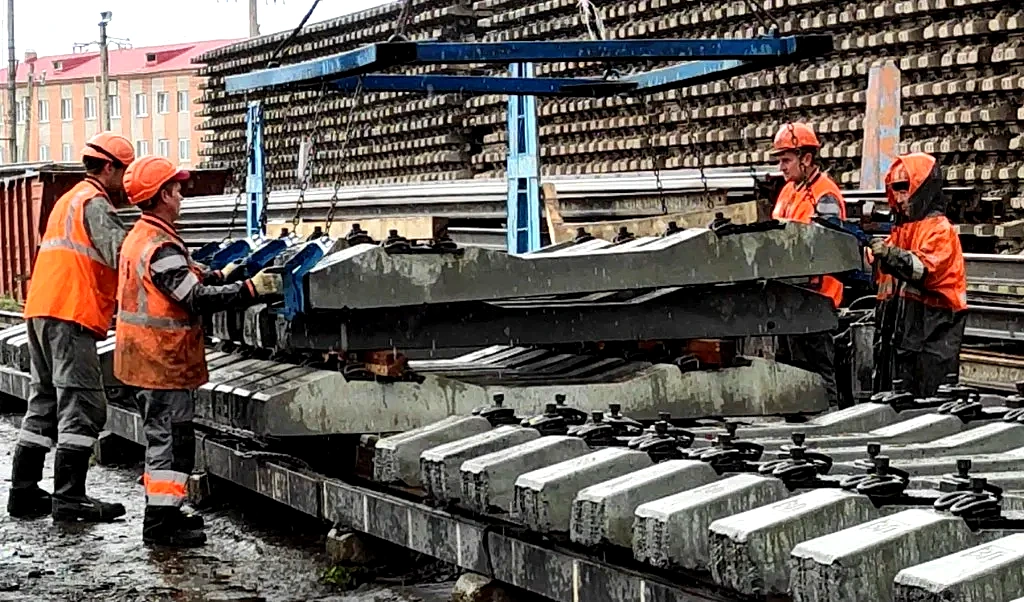
Three sequential stages: track panel assembly at a track maintenance depot, subgrade preparation using cold recycling technology, and panel installation on a section of the Krasnoyarsk Railway.

Track panel assembly at the track maintenance depot

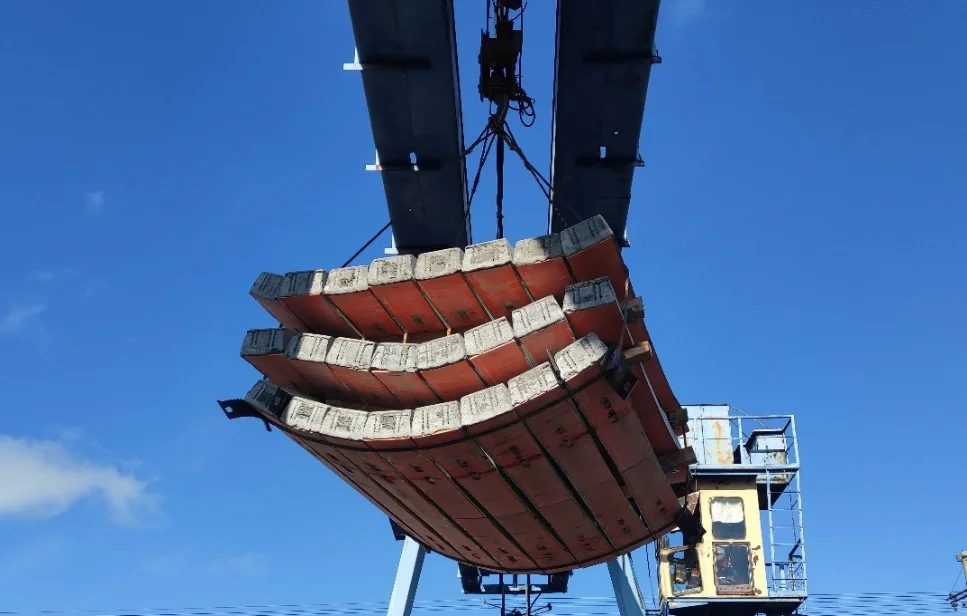
Assembly of the track panel with intermediate rail fastenings and sleepers developed under the project at a track maintenance depot (TMD).

Rollout outlook

Installation (rollout) of new track structures, identified as most effective according to the technical and economic justification, is planned to begin on heavily loaded sections of the Russian Railways network from 2027.

All heavily loaded sections of the Russian Railways network — more than 17 thousand km — are prospective rollout sites for the developed innovative track structure.

Innovative railway track structure for heavily loaded sections and its elements (Path V2.5)